

Related Posts
Publication of the revision of EA-4/20 Guidance for the assessment of laboratories against EN ISO 15189:2022 Point-of-Care Testing
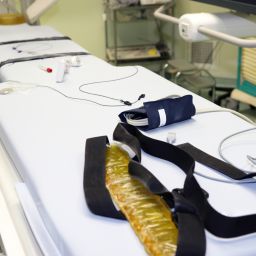
EA published the revision of the document EA-4/20 Guidance for the assessment of laboratories against EN ISO 15189:2022 Point-of-Care Testing (POCT) on 21 April 2026
22 Apr 2026
The EU Emission Trading System and the role of accreditation
The EU Emissions Trading System (EU ETS) is the first international emissions trading system. It was established in 2005 and is remaining the largest carbon market.
04 May 2023

Refresher Training for Team Members authorized for Product certification and Inspection
Refresher Training for Team Members authorized for Product certification and Inspection was held on June 6-7 2023.
19 Jun 2023

Workshop on Regulation (EU) 2015/757 (MRV/ETS Maritime) and Regulation (EU) 2023/1805 (FuelEU Maritime)
EA is organising, on 29 September, with the European Commission, a workshop to provide an opportunity for EA National Accreditation Bodies to exchange views with the European Commission on the proposed MRV simplification measures.
31 Aug 2026

The EU CBAM and the role of accreditation
The EU Carbon Border Adjustment Mechanism (CBAM), which entered into force on 1 January 2026, is a climate policy tool designed to prevent carbon leakage and ensure fair competition between EU and non-EU producers.
27 Jan 2026

Workshop organized by EA on AI and its use by NABs – Second part
170 participants attended the second session of its workshop series on AI and its use by NABs on the 30th October 2025.
09 Dec 2025

Train the trainer course on ISO 15189:2022
The EA Train-the-trainer course on ISO 15189:2022 was held between 6-9 June 2023 in Paris, France.
21 Jul 2023

Publication of a survey targeting verifiers or other persons interested in applying for CBAM accreditation
The European Commission services recently published a survey targeting verifiers or other persons interested in applying for CBAM accreditation.
16 Apr 2026

Workshop on Regulation (EU) 2024/482 European Common Criteria-based cybersecurity certification scheme
EA is organising on 28 April with ENISA a workshop on the implementation of the Implementing Regulation (EU) 2024/482, aiming at enhancing harmonisation among NABs.
13 Apr 2026
CEN, CENELEC, EA, EURAMET, and WELMEC join forces to reinforce and promote the European Quality Infrastructure
PRESS RELEASE – 13 March 2024 On 7 March, the five Regional Quality Infrastructure Organizations of Europe, the European Committee…
15 Mar 2024

The European Quality Infrastructure Network celebrates World Standards Day 2025
On World Standards Day 2025, CEN, CENELEC, EA, EURAMET, EUROLAB, PROSAFE and WELMEC come together to celebrate the vital role of partnerships in achieving the United Nations Sustainable Development Goals…
14 Oct 2025

Train-the-Trainer on accreditation of Proficiency Testing Providers (PTP) against ISO/IEC 17043:2023
Fifty-five participants attended two Train-the-Trainer sessions organized by the EA Laboratory Committee on Accreditation of Proficiency Testing Providers
16 Feb 2024
World Accreditation Day 2025
We celebrate World Accreditation Day each year on June 9.
09 Jun 2025

Publication in the Official Journal of the Cyber Resilience Act
On October 14, 2024, the European Commission adopted a new regulation on cybersecurity requirements for products with digital elements.
29 Nov 2024