

The European Cooperation for Accreditation (EA) Multilateral Agreement (MLA) continued in 2025 to play a vital role in supporting confidence, transparency, and cooperation in accreditation across Europe. It successfully adapted to evolving demands while maintaining its strong and trusted foundation.
Throughout the year, EA strengthened its peer evaluation system, ensuring that all 44 signatories of the MLA uphold the highest standards of accreditation. The peer evaluation system is dynamic, continuously evolving to cover all new EU legislations. These rigorous evaluations are essential for maintaining the credibility and reliability of the MLA and foster a culture of continuous improvement and collaboration among members.
In addition, the MAC focus points approach was introduced within the peer evaluations, further enhancing their effectiveness and consistency. The cooperation between national accreditation bodies, supported by EA, reflects a shared commitment to excellence and mutual trust.
Operationally, 2025 brought both progress and challenges. A higher number of peer evaluations was achieved, although with fewer man-days due to a reduced number of scopes evaluated. While the overall number of evaluators remained stable, ongoing efforts focused on reinforcing resources, aiming not only to increase the total number of evaluators but also to expand the pool of Team Leaders and Deputy Team Leaders.
At the same time, EA organized targeted training programmes, which received highly positive feedback. This confirmed both the strong competence of participants and the effectiveness of the training approach.
In addition to these core activities, EA launched the process of peer evaluation in the field of biobanking, reflecting its proactive approach to expanding accreditation into new areas.
Furthermore, the EA MLA Mark was introduced in 2025, enhancing the visibility of EA and reinforcing recognition of accredited bodies across Europe and internationally.
The achievements of 2025, including successful transitions within agreed timeframes, continued recognition to new sub-scopes by International Accreditation Forum (IAF)1, highlight the resilience and adaptability of the MLA framework. These outcomes reflect the dedication of EA members, peer evaluators, and the Secretariat in ensuring that accreditation in Europe remains a trusted pillar of quality infrastructure, driving confidence, facilitating trade, and supporting societal goals.
Maria Papatzikou (ESYD)
Chair of the EA Multilateral Agreement Council
To download the EA MLA Report 2025: https://european-accreditation.org/wp-content/uploads/2026/04/EA-MLA-report-2025.pdf
To download the summary infographic: https://european-accreditation.org/wp-content/uploads/2026/04/Infographics-EA-MLA-report-2025.pdf
1 From January 1, 2026, Global Accreditation Cooperation Incorporated will become the single international leader unifying the roles of the International Accreditation Forum (IAF) and International Laboratory Accreditation Cooperation (ILAC).

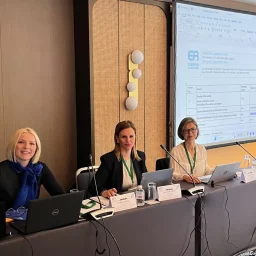
The EA MAC considered the outcome of the re-evaluation of BAS (Bulgaria).

The EA MAC considered the outcome of the re-evaluation of BAS (Bulgaria).