


Skip to main content Scroll Top

News

EA MAC Refresher Training for the Team Members authorized in Medical Examinations and Proficiency Testing Providers

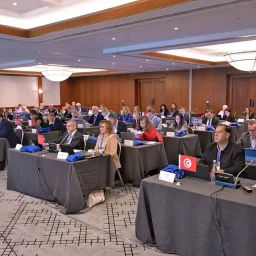
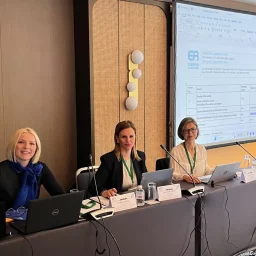
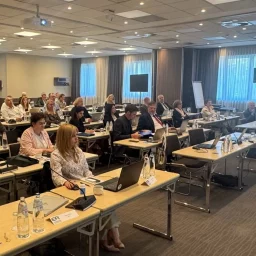
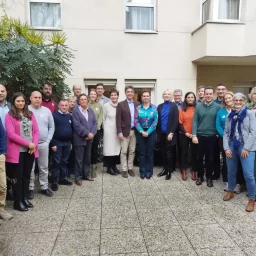
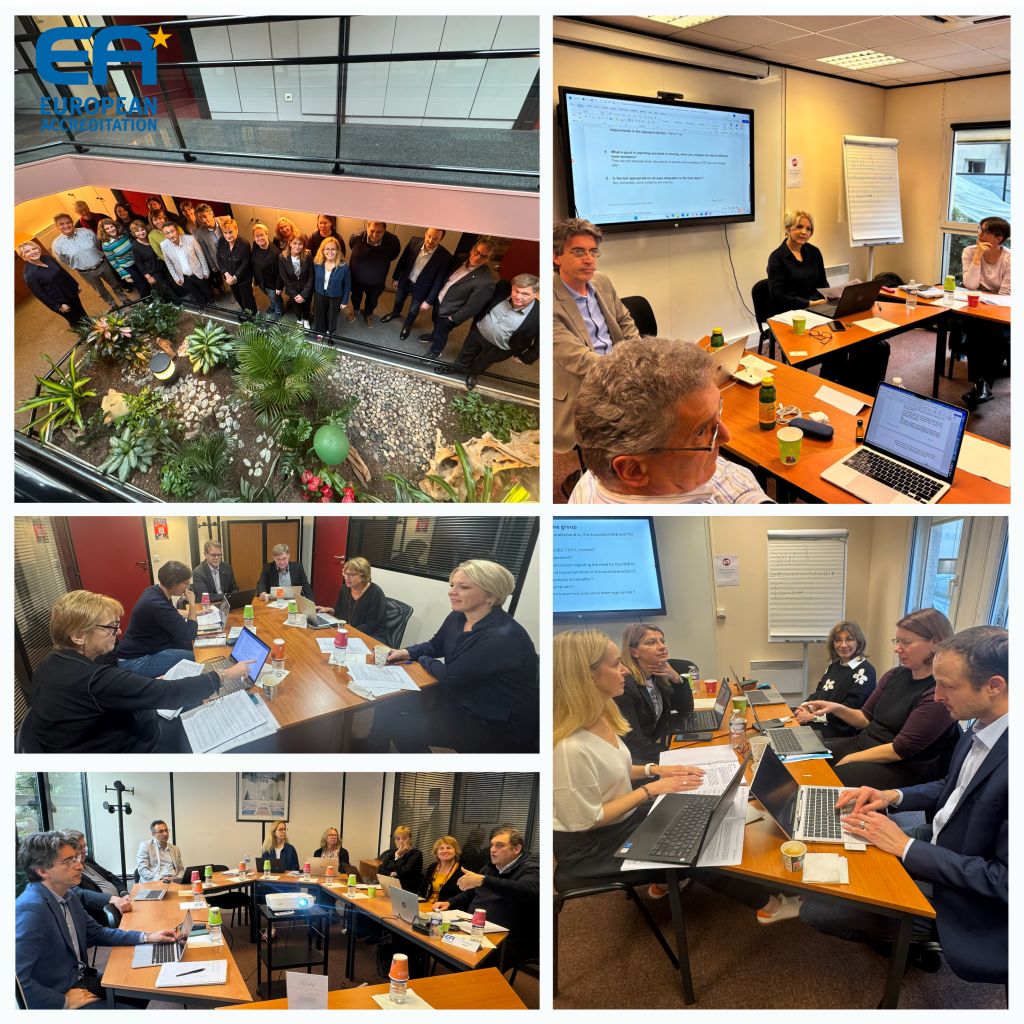
19 participants from 15 National Accreditation Bodies (NABs) participated in the training led by Hélène Mehay (COFRAC, the French NAB), Sergio Guzzi (ACCREDIA, the Italian NAB), and Ankica Barišić, Manager of Peer evaluations and Evaluators (EA Secretariat) on 5-6 November 2025.

The training session covered the main topics of ISO/IEC 17011:2017 Conformity assessment — Requirements for accreditation bodies accrediting conformity assessment bodies requirements, the recent EA Multilateral Agreement Council (MAC) decisions, and the most important issues related to the peer-evaluation process (preparation, sampling and file review, witnessing, reporting), as well as the behavior of the evaluators.

The next part of the training featured two breakout sessions on Medical Examinations and on Proficiency Testing Providers.

EA regularly organizes refresher training sessions for peer evaluators to improve their performance and harmonization of work.

Sergio Guzzi, MAC Vice Chair and Trainer for the Proficiency Testing Providers (PTP) part, highlighted the role of those training sessions: “Refresher training is intended for already authorized assessors, with or without experience in peer evaluations. Peer evaluations can be challenging: time constraints, different cultural approaches, different languages, and the workload. Refresher training sessions are designed to help peer evaluators, focus more on sharing experiences and agreeing on the best way to approach a topic, rather than being a one-directional, vertical training. The added value is that it consolidates evaluators’ knowledge and competence, and also enhances links among them, forming a stronger community of peer evaluators. As a consequence, its structure is smarter and more flexible, with more interactions among participants.”

On the challenges to have successful training sessions, he mentioned that “the secret is to involve participants in the preparation, include case studies, make the training environment comfortable, create a good mood with the participants, and prepare interesting presentations”.

Hélène Mehay, Trainer for Medical Examinations part, emphasized that what she will take away from the training and from the conversation with the trainees “is that it is important to remain open to different approaches and to collaborate effectively with the other peer evaluators of the team.” And Sergio Guzzi added that “there are different ways for reaching the same objectives and that we have to always be open to different approaches.”

Following the trainers’ perspectives, participants expressed their appreciation and key takeaways from the training.

For François Suder, COFRAC (the French National Accreditation Body): “ The topics covered were interesting and useful. I noted several pieces of information that will be helpful for my next peer evaluation in 15 days. The conversations were very fruitful, with a perfect blend of experience, and the trainers were very sympathetic”.

Alessandro Pichini, ACCREDIA (the Italian NAB), added that “the availability of the trainers and the presentations were greatly appreciated. It was useful to have, in addition to presentations, real case studies and the exchange of information between trainers and trainees. Compared to the previous refresher training session, which took place remotely, it was much more effective.”

Regular refresher training sessions are crucial for strengthening the EA MLA system, as they provide an opportunity to enhance the harmonization of evaluators’ work and perspectives on specific issues in the peer-evaluation process. 

To go further

Related Posts