

The European co-operation for Accreditation (EA) has been recognised by the European Commission (EC) as the official European accreditation infrastructure. The recognition of EA follows the adoption of Regulation (EC) No 765/2008 by the European Parliament and the European Council, which establishes the legal framework for accreditation in the EU.
EA and the European Commission (EC) cooperate closely for the development and the implementation of EU regulations that refer to accreditation and conformity assessment activities. The main communication channel for EA is the Directorate-General for Internal Market, Industry, Entrepreneurship and SMEs (DG GROW).
The number of regulations being developed or published over the past years is a clear indication of the confidence placed in accreditation and the European Accreditation infrastructure. It also demonstrates how well cooperation has evolved over the years, EA having adapted its internal organization to contribute at the right time. Confidence also exists in the almost daily interaction between EA and the EC services. It has helped ensure that EA can give its expertise about the benefit of using accreditation at the right stage of legislation development, sufficiently in advance for a sound and applicable set of requirements to be used in the various fields.
Here are a few examples of Climate and Environment Regulations to illustrate how accreditation positively impacts your day-to-day life:

EU ETS
The European regulator published around 50 EU legislations in the climate/environment sector. A key element in this sector is the EU Emission Trading System (EU ETS).
The EU ETS is the world’s first and largest carbon market, operating on a “cap and trade” principle to cut greenhouse gas emissions cost-effectively from power, industry, aviation, and maritime transport. It sets a limit (cap) on total emissions, issues allowances (permits to emit), and allows companies to buy/sell them (trade), creating a price for carbon that incentivizes reductions, with auctioning being the main distribution method.
Accredited verification bodies play a central role in the EU ETS by acting as an independent third party to verify the accuracy and reliability of companies’ emissions reports. This independent verification is crucial for the credibility and integrity of the entire system.
To date, 27 EA Members are signatories to the EA MLA for the scope GHG Validation and Verification with 248 accreditations valid at the end of 2025 (Source: EA survey – January 2026).
To access the list of NABs that have successfully undergone peer evaluation for accreditation of verifiers, and whose accreditation certificates delivered to accredited verifiers shall be accepted by the Member States (which shall respect the right of verifiers to carry out the verification for their scope of accreditation), select the scope “Validation and Verification” by clicking on “Enter any keyword or choose in the list below” on the following page.

EU MRV Shipping
Following the requirement for companies (shipowners) to submit a monitoring plan for each ship to the verifiers by August 2017 and from 2019 each year by the end of April to submit a verified emissions report to the Commission, the first verifiers were accredited in 2017. The scope of accreditation covers the assessment of monitoring plans and the verification of emissions reports.
During the second reporting year, covering 2021 data, more than 11,700 ships owned by more than 1,600 companies were involved in the system. Verification activities were performed by 20 accredited verifiers.
The National Accreditation Bodies (NAB) that have successfully undergone peer evaluation for accreditation of verifiers and provide services for the accreditation of verification bodies for assessment of monitoring plans and verification of emissions reports according to Commission Implementing Regulation (EU) No. 2018/2067 (EU ETS) and Regulation (EU) 2015/757 (MRV) can be found in the following link.
EU CBAM
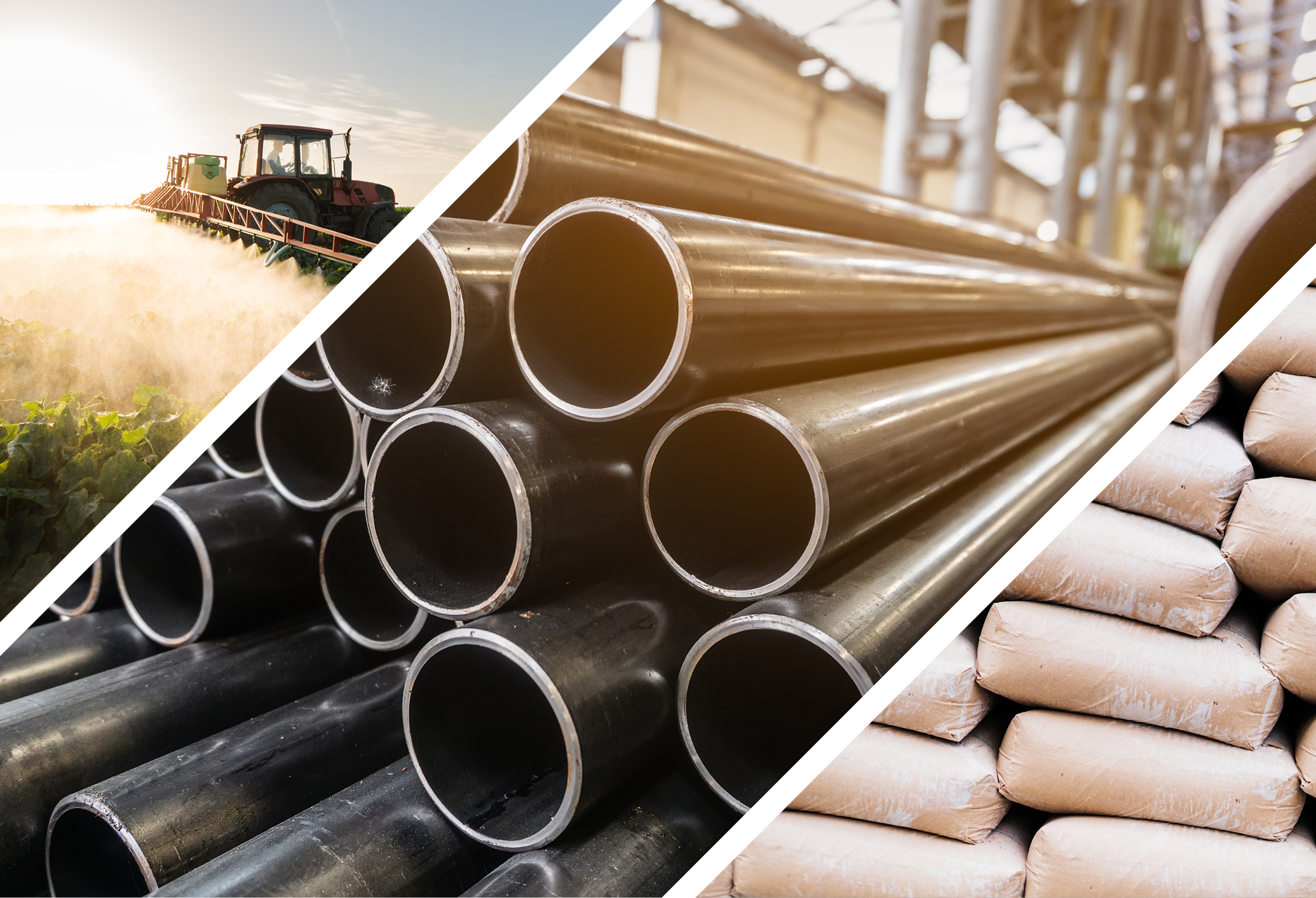
The EU Carbon Border Adjustment Mechanism (CBAM), which entered into force on 1 January 2026, is a climate policy tool designed to prevent carbon leakage and ensure fair competition between EU and non-EU producers. CBAM puts a carbon price on certain imported goods that is equivalent to the carbon price EU producers pay under the EU Emissions Trading System (EU ETS).
It concerns sectors producing iron and steel, cement, aluminum, fertilizer, electricity, and hydrogen.
The embedded emissions shall be verified by an independent body (verifier) that is accredited according to Regulation (EC) No 765/2008 by an EU (EEA) National Accreditation Body (NAB).
According to the EU CBAM Regulation and the Delegated Regulation 2025/2551, a verifier located in the EU shall apply for accreditation to its National Accreditation Body. Verifiers established in a third country shall request a National Accreditation Body from the EU that provides accreditation under EU CBAM to grant accreditation.
Where the National Accreditation Body provides accreditation services under EU CBAM but is unable to carry out the accreditation of a verifier established in a third country, the National Accreditation Body – with the support of EA – will help those verifiers to find a National Accreditation Body that can provide accreditation in the third country concerned.
The first CBAM declarations, in respect of the calendar year 2026, shall be submitted by 30 September 2027 to the competent authority of the EU Member State where the authorized CBAM declarant (usually the EU importer) is established, via the CBAM registry. These annual declarations shall include embedded emissions data that has been verified by an accredited verifier.
EA has published a directory of National Accreditation Bodies that intend to offer accreditation of verifiers for EU CBAM. You can find this directory here.

Carbon Removals and Carbon Farming (CRCF)
Carbon removals and carbon farming play a central role in achieving EU climate neutrality by extracting CO₂ from the atmosphere and storing it safely and durably.
By leveraging biological resources, scientific excellence and industrial prowess, carbon removals and carbon farming help decarbonise the EU economy, replace fossil-based materials with EU-grown bio-based alternatives, and strengthen the resilience of EU bio-based supply chains. They also contribute to a broader strategy to enhance competitiveness, improve geopolitical security, and achieve resource independence.
As a fundamental step to build trust in carbon removals and carbon farming while creating a competitive, sustainable and circular economy, the Commission adopted the Carbon Removals and Carbon Farming (CRCF) Regulation (EU) 2024/3012. The CRCF Regulation established the first EU-wide voluntary certification framework for:
- permanent carbon removals
- carbon farming
- carbon storage in products
In November 2025, the Implementing Regulation (EU) 2025/2358 laying down rules on certification schemes, certification bodies, and audits under Regulation (EU) 2024/3012 has been published in the Official Journal of the EU.